
Tornado Emergency Kit: What to Stage Before the Siren
Published August 1, 2026
A tornado gives you minutes, not days. That single fact shapes the whole kit. Where a hurricane kit is partly a go-kit, a tornado kit is built entirely around shelter-in-place: it lives where you will actually shelter, and it is staged before the season so you are never assembling it while a siren goes off. The plan matters as much as the gear.
Watch versus warning
Get these two straight, because they drive everything. A tornado watch, issued by the National Weather Service, means conditions are favorable and you should be ready to act. A tornado warning means one has been spotted or shown on radar and you shelter now. Tornadoes often arrive at night or in the noise of a larger storm, which is why a NOAA weather radio with an alert function is the backbone of the kit. It will wake you when your phone is on silent and the power is already out.
The shelter-in-place kit
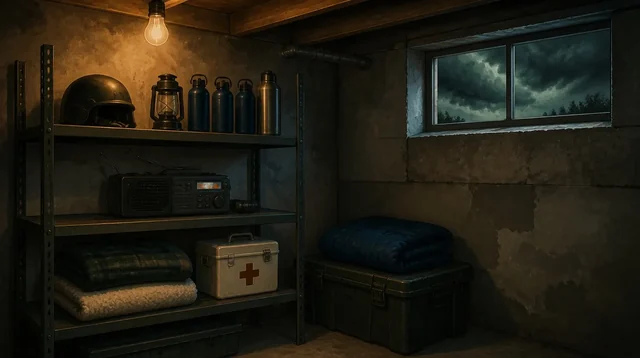
Pick your spot first: the lowest floor, a small interior room or basement, away from every window, with as many walls between you and the outside as possible. Stage this kit right there, or in a bin you can grab on the way.
| Item | Purpose |
|---|---|
| NOAA weather radio | Alerts when you are asleep or off-grid |
| Flashlights and headlamps, spare batteries | Hands-free light if the power drops |
| Helmets (bike or sports) | The National Weather Service recommends head protection from debris |
| Sturdy closed-toe shoes | Broken glass and nails are the after-storm hazard |
| Whistle | Signal rescuers if you are trapped |
| First aid kit and a week of medications | Care until help reaches you |
| Phone and charged power bank | Contact and information |
| Blankets or a mattress to pull over you | Shields against falling debris |
| Water and calorie-dense snacks | If you are stuck or the aftermath drags |
| Work gloves and a dust mask | For digging out and dirty air afterward |
Put shoes and a helmet by the shelter spot during the season so nobody is hunting for them in the dark. Keep copies of documents and a little cash in the bin too.
Before and after the siren
The preparation is behavioral as much as material. Practice the walk to your safe room so children know it cold. Charge devices when storms are forecast. When a warning hits, go immediately and cover up; do not watch from a window or try to outrun it in a car on open roads.
Two situations deserve their own plan. A mobile or manufactured home is not safe in a tornado even when it is tied down, so decide ahead of time where the nearest sturdy building or community shelter is and go early on a warning. And if you are caught driving with no shelter in reach, do not stop under a highway overpass; wind accelerates through that gap, and it is one of the most persistent myths in tornado safety. A low ditch away from the vehicle is the grim last resort the National Weather Service points to instead.
Afterward, gloves and closed-toe shoes go on before you move through debris, and you stay clear of downed power lines and any smell of gas. Calm and rehearsed beats fast and panicked every time.
The rest of the emergency cluster fills in the gaps: the hurricane checklist is the evacuate-capable counterpart to this shelter-in-place approach, the power outage kit covers the blackout that usually follows, the 72-hour bug-out bag handles the times you do have to leave, and dependable light plus stored water are the two things you will want within arm's reach.
More in the Field Journal or start with the season guides.