
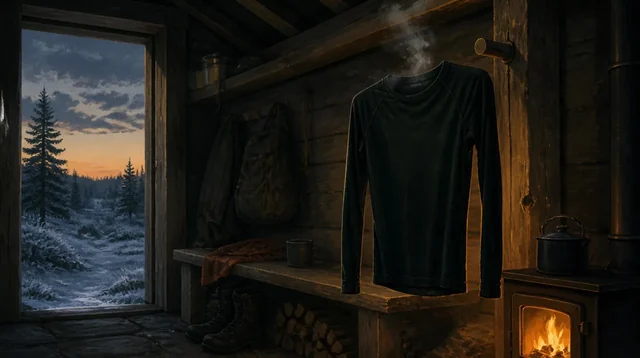
Best Merino Wool Base Layers: What Keeps You Warm When Wet
Published August 13, 2026
A base layer is the piece of clothing touching your skin, and in the cold it does two jobs at once: it moves sweat away so you do not chill, and it holds warmth even after it gets damp. Merino wool is the material most people who work in cold, wet conditions settle on, because it does both better than cotton (which kills you when wet) and better than most synthetics on the odor and warmth-when-damp front. On Alone this matters more than it sounds, because clothing does not count against a contestant's item limit, so people can layer as heavily as they want without spending one of their picks.
The weights, decoded
Merino is sold by fabric weight in grams per square meter, and that number tells you almost everything about where a layer belongs. Lighter fabric breathes and dries faster; heavier fabric holds more warmth but dries slower and packs bigger. Most people are best served by matching weight to how hard they will be working and how cold it gets.
| Weight (g/m2) | Best for | Trade-off |
|---|---|---|
| ~150 | Cool weather, high output, aerobic effort | Thin, limited standalone warmth |
| ~200 | The three-season all-rounder | Hard to go wrong |
| ~250 | Deep cold, lower activity | Warmer, dries more slowly |
| ~330 and up | Static Arctic cold, expedition use | Heavy, bulky, overkill for most |
The common mistake is buying one heavy layer for everything. A 200-weight top and bottom will cover more real conditions than a single expedition-weight set, because you can add insulation over a versatile base but you cannot make a too-warm base breathe.
Brand lines worth knowing
A handful of makers have long, well-regarded merino lines, and the honest truth is that fit matters as much as brand. Smartwool's Classic and Intraknit ranges, Icebreaker's 200 and 260 series, and Minus33 on the value end all show up repeatedly in cold-weather use. Woolpower and Ridge Merino round out the field. Prices sit in a broad band from budget to premium depending on weight and construction, so buy on weight and fit first rather than the logo. Blended fabrics (merino with a little nylon) trade a bit of pure-wool feel for meaningful durability, which is a reasonable deal for a layer that will be worn hard.
Merino, synthetic, or a blend
Merino is not the only option, and honesty helps here. Synthetic base layers in polyester or polypropylene dry faster and cost less, but they hold odor badly, which matters on a multi-day trip where washing is not happening. Pure merino wins on smell and on warmth when damp, though it dries more slowly and wears through faster at high-friction points like the elbows. That is why many of the best modern layers are blends, mostly merino with a little nylon or elastane added for durability and shape retention. However you choose, fit is the quiet variable: a base layer should sit snug against the skin, close enough to wick but not so tight it restricts movement, because a loose base layer traps cold air instead of moving sweat off your body.
The Alone connection
Because clothing does not count toward the 10 items, a base layer is effectively free gear on the show, and contestants dress for the location accordingly. That is why wool dominates the wardrobe from the skin out, a pattern covered in full in what Alone contestants actually wear. The same logic that makes wool the default for a season in the frozen north makes it the default for anyone else heading into cold, wet country: it keeps working when it is wet, and staying warm while damp is the entire problem. Pair a good base layer with proper merino socks, and the extremities and core are handled by the same principle.
More in the Field Journal or start with the season guides.